
Venice Weather by Month: Best Time to Visit and Ride a Gondola
Venice weather runs from an average high of 6.7°C in January to 27.5°C in July, with the most rain in October (141 mm) and the high-water season from October to December. The best time to visit Venice for a gondola ride is April to June or September: mild air, sunsets between 19:23 (mid-September) and 21:00 (mid-June), and little risk of acqua alta. October to March has one upside of its own: the sun sets before 19:00, so you can ride after dark at the €90 day fare instead of the €110 evening fare. Pick a month below for its weather, daylight, events and fares.
Venice weather in winter: December, January and February
Winter is cold and short on light. Average highs run from 6.7°C in January to 8.6°C in February, lows from 1.4°C to 3.3°C, and the sun sets between 16:27 and 17:36. Rain is light, 62 to 78 mm a month. The upside for a gondola ride is that two hours or more of darkness still fall inside the €90 day fare, which runs to 19:00. December still sits in the acqua alta season, and the 2027 Carnival runs from 23 January to 9 February.
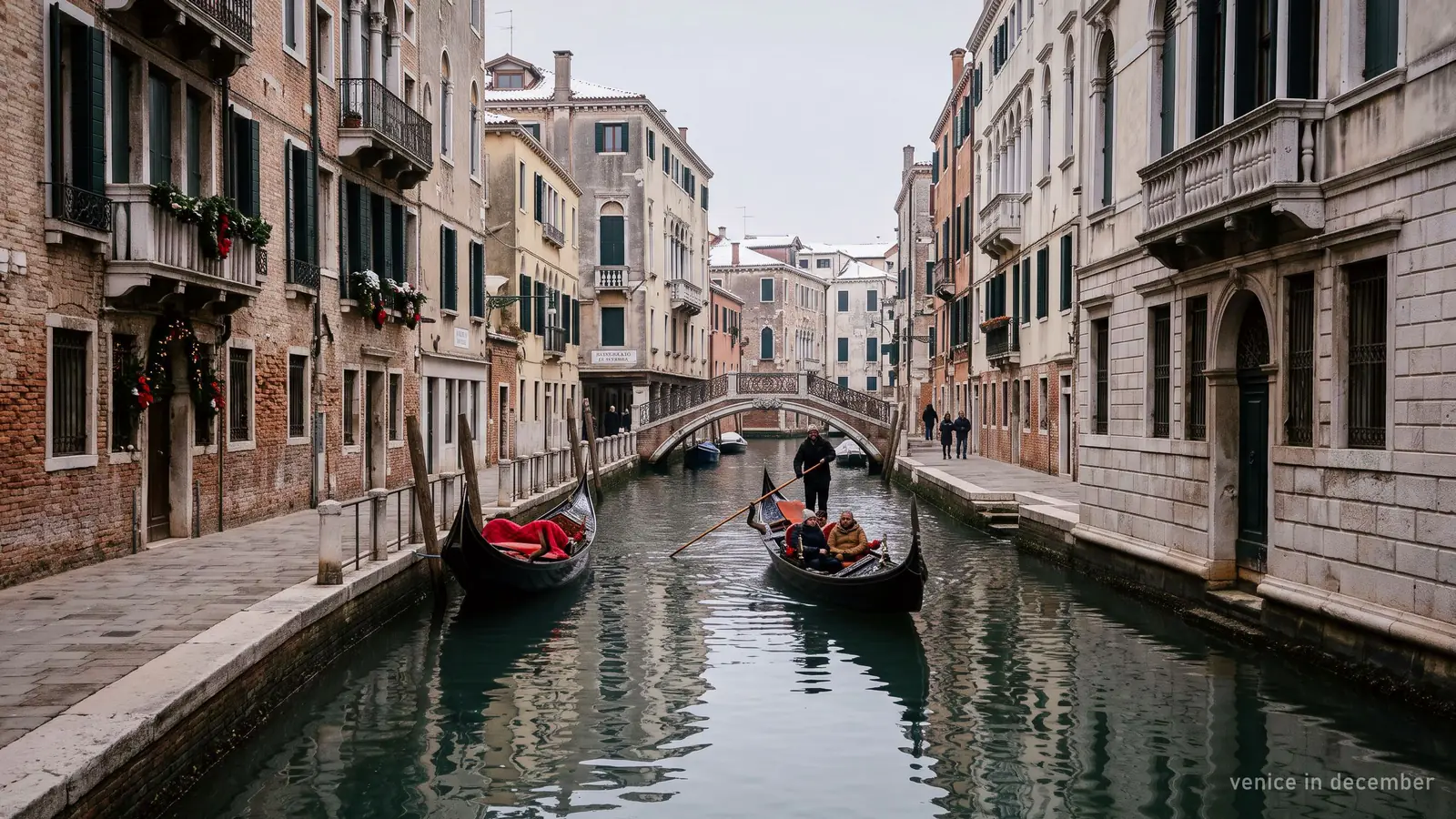
Venice in December 2026: Weather, Holidays and Gondola Rides
Venice in December: 8.1°C highs, the year's shortest days (sunset 16:27) and acqua alta season. How to plan a gondola ride over the holidays.
December
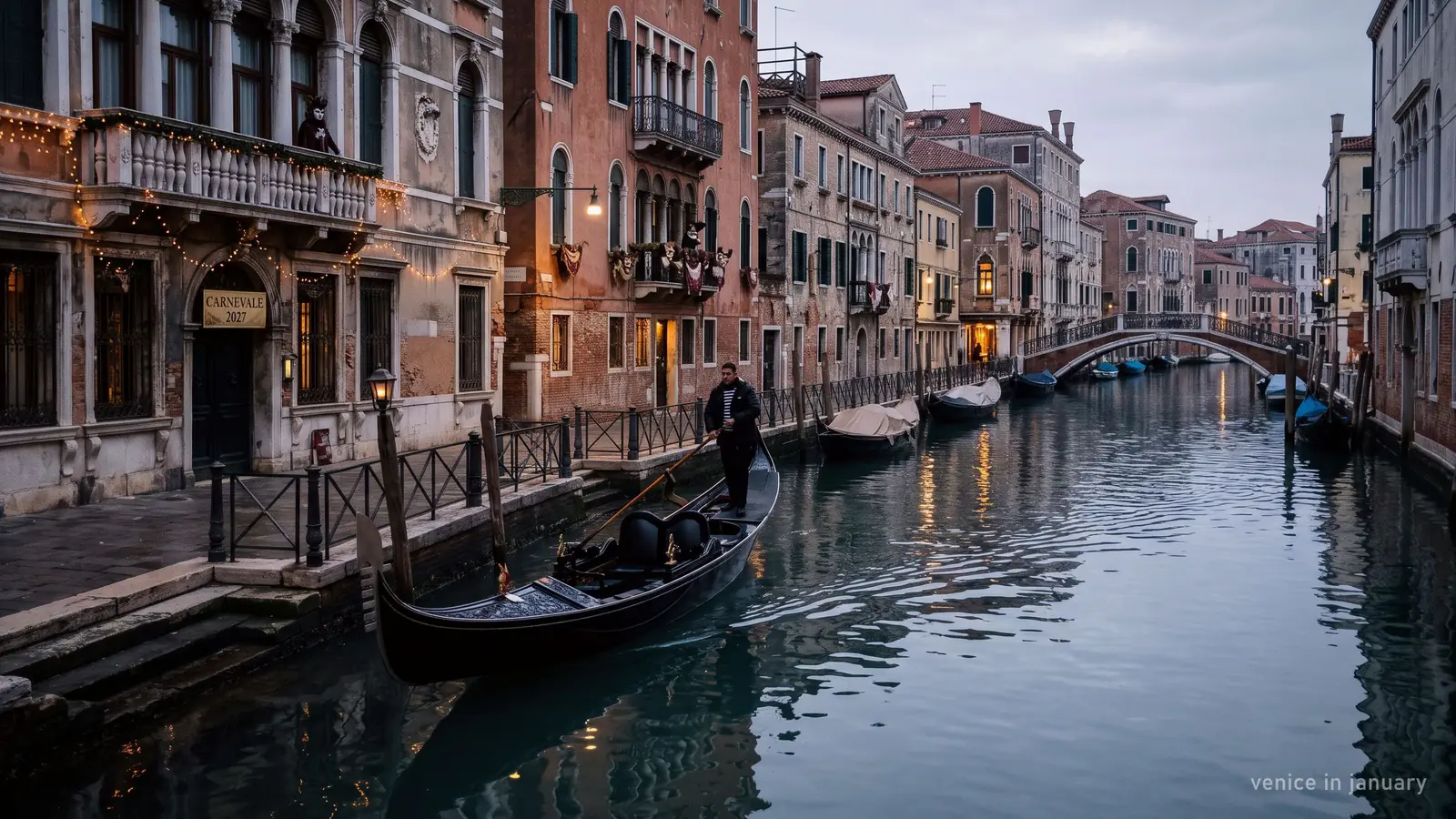
Venice in January 2027: Weather, Carnival and Gondola Rides
Venice in January: highs of 6.7°C, sunset before 5 pm and Carnival from 23 January 2027. What winter means for a gondola ride, the fare and acqua alta.
January
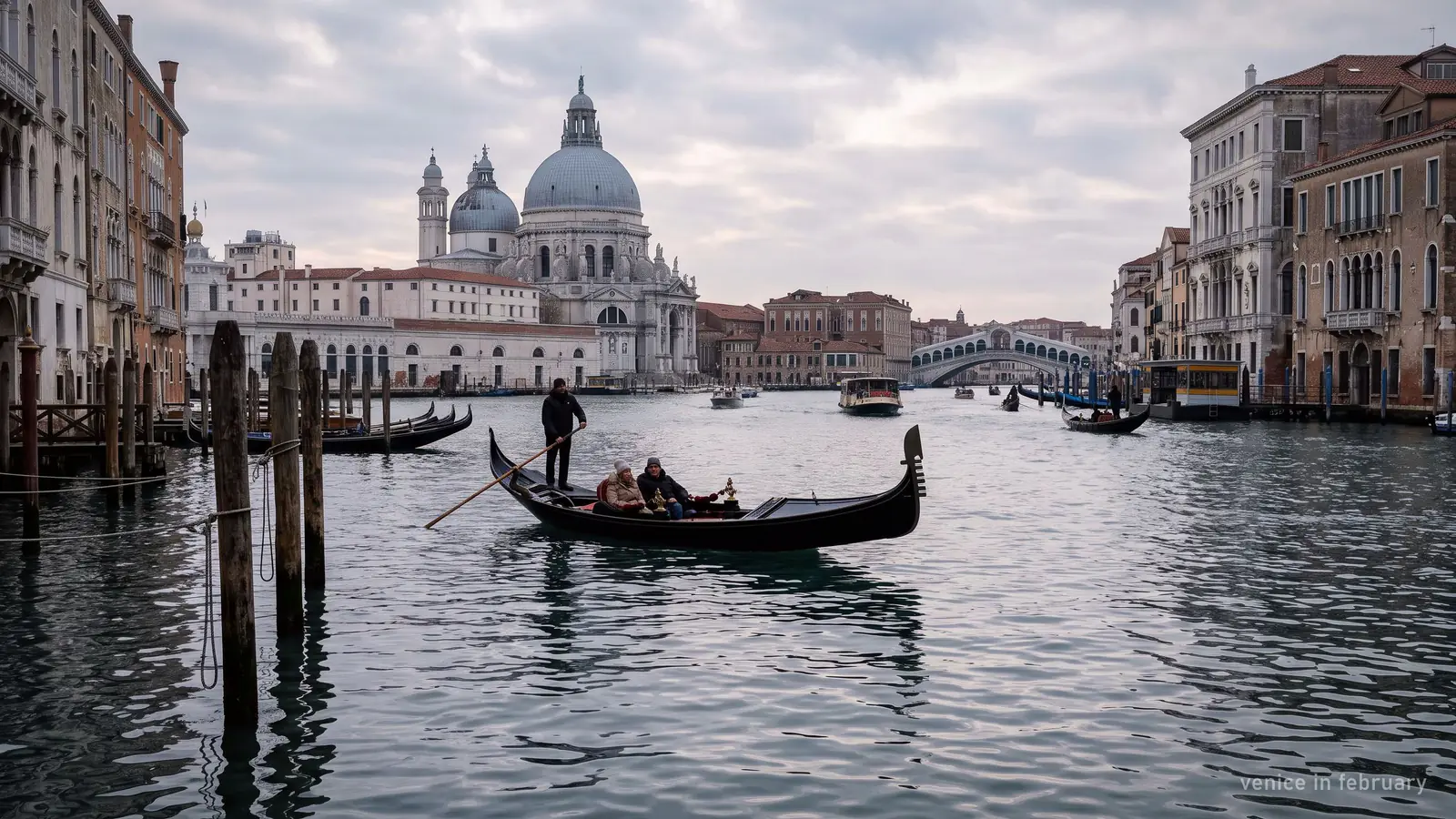
Venice in February 2027: Carnival Weather and Gondola Rides
Venice in February: 8.6°C highs, sunset at 17:36 and Carnival until 9 February 2027. How the month works for a gondola ride, from the fare to the tides.
February
Venice weather in spring: March, April and May
Spring warms fast, from a 12.3°C average high in March to 20.9°C in May, and sunset moves from 18:15 to 20:33. Rain rises from 7 to 11 wet days a month. From April the whole day-fare window, 09:00 to 19:00, is in daylight, and a sunset ride falls in the €110 evening fare. Easter is 28 March 2027, the 2027 Architecture Biennale opens on 8 May, and the Festa della Sensa and Vogalonga put rowing boats on the lagoon.
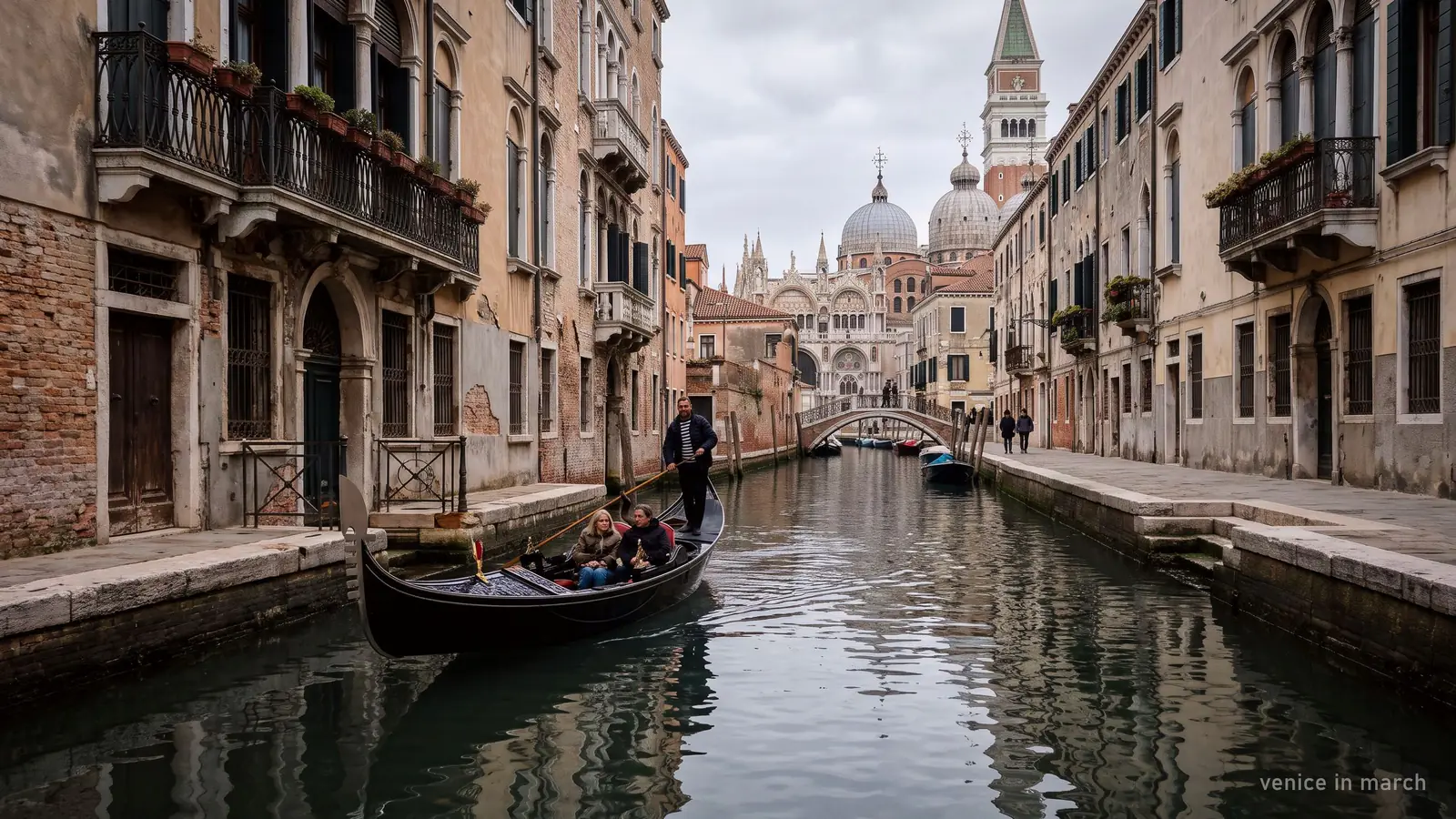
Venice in March 2027: Weather, Easter and Gondola Rides
Venice in March: highs of 12.3°C, sunset at 18:15 and Easter on 28 March 2027. What spring's start means for a gondola ride and the €90 day fare.
March
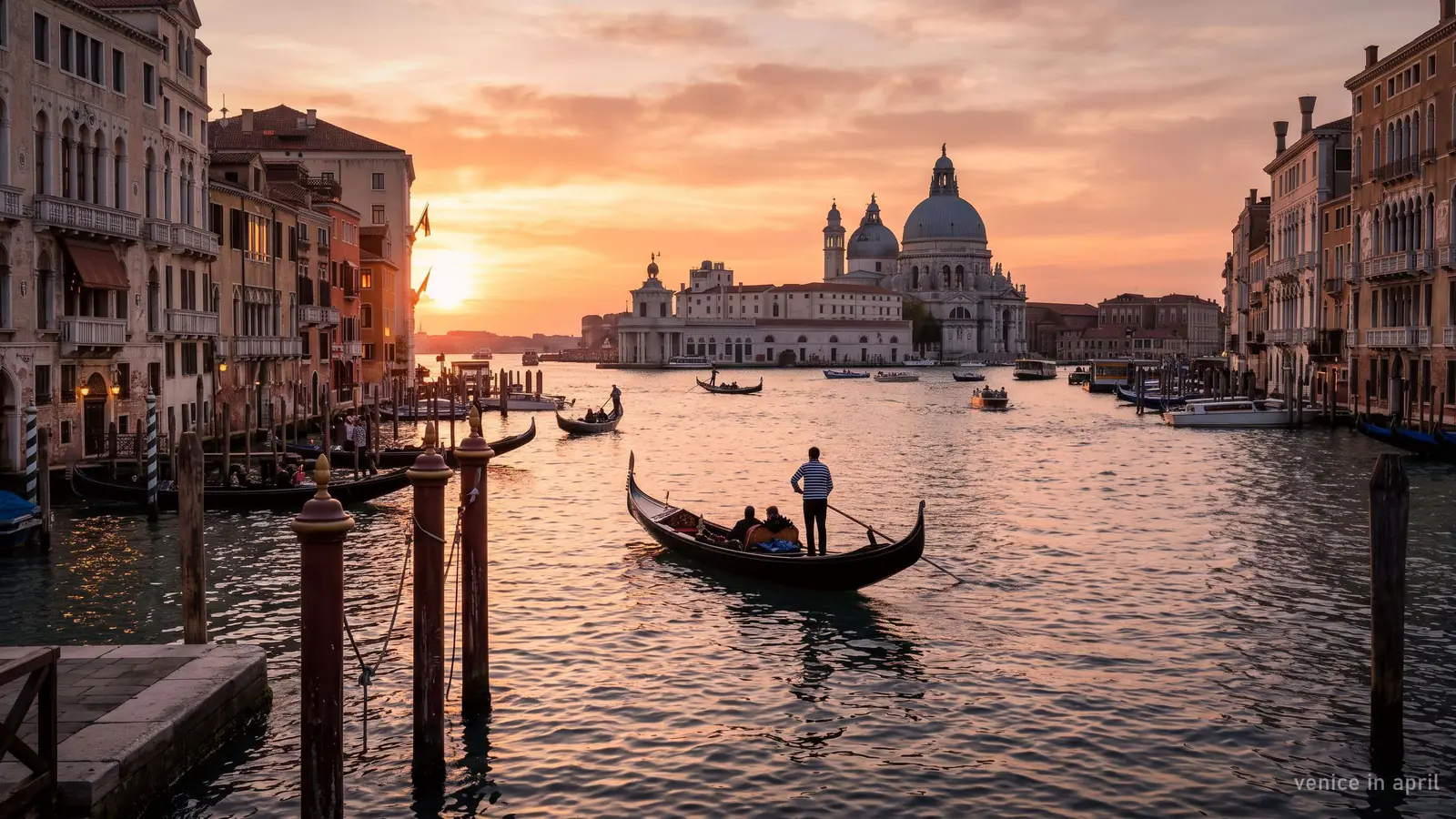
Venice in April 2027: Weather, Sunset Rides and Gondolas
Venice in April: 16.3°C highs, sunset near 19:55 and the access fee season. When to ride a gondola in April and which fare applies at sunset.
April
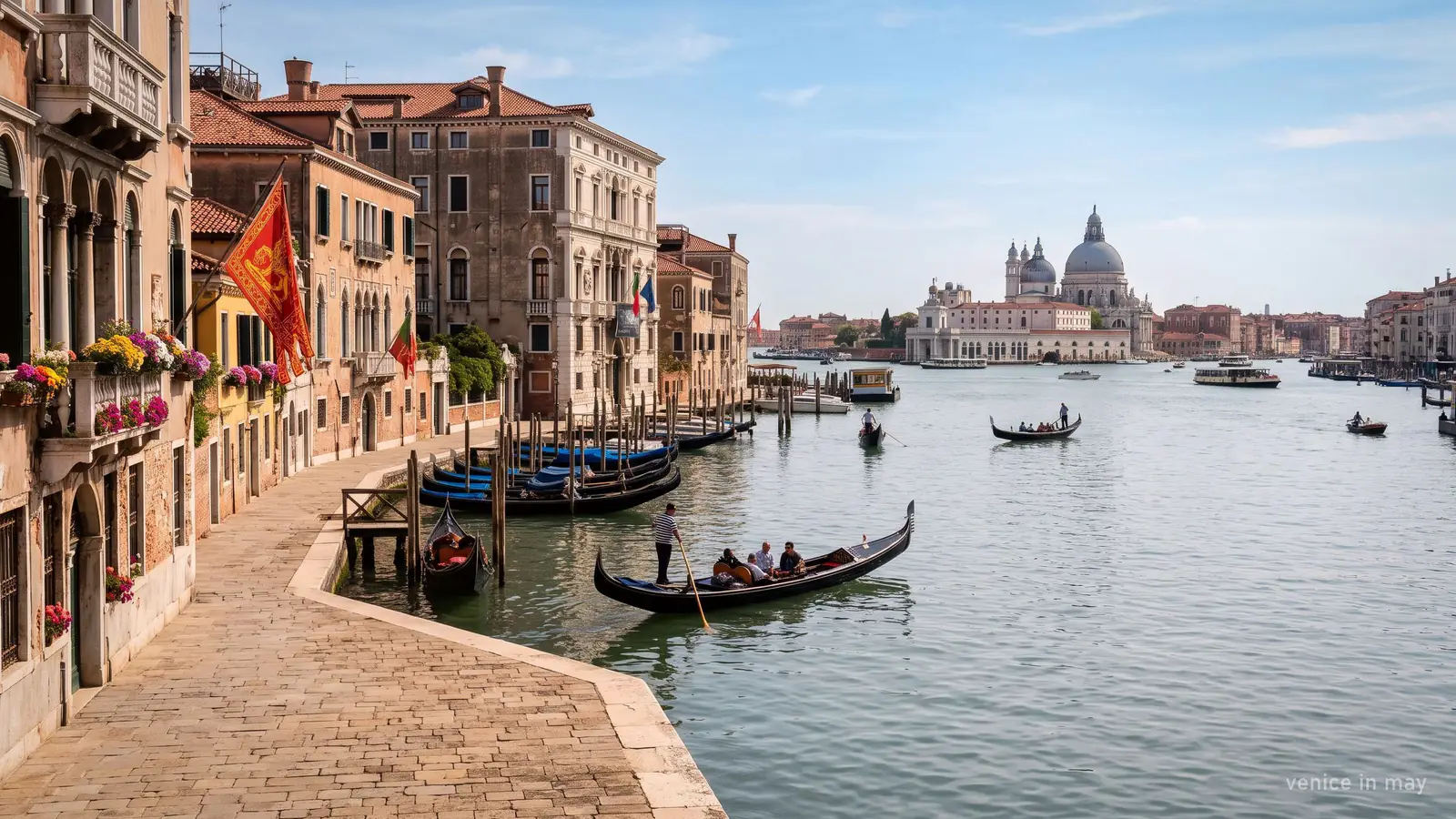
Venice in May 2027: Weather, Biennale and Gondola Rides
Venice in May: 20.9°C highs, sunset at 20:33, the Vogalonga and the 2027 Biennale from 8 May. How May works for a gondola ride and its fares.
May
Venice weather in summer: June, July and August
Summer is warm and humid, with average highs of 24.4°C in June and about 27.5°C in July and August, and lows of 17.5°C to 19.6°C. June has the most wet days of the year, about 12. Days are long: the sun sets around 21:00 in June and 20:19 by mid-August, so even the €110 evening fare from 19:00 comes with daylight. Ride at 09:00 or after 19:00 to avoid the midday sun. The Festa del Redentore falls on the third Sunday of July.
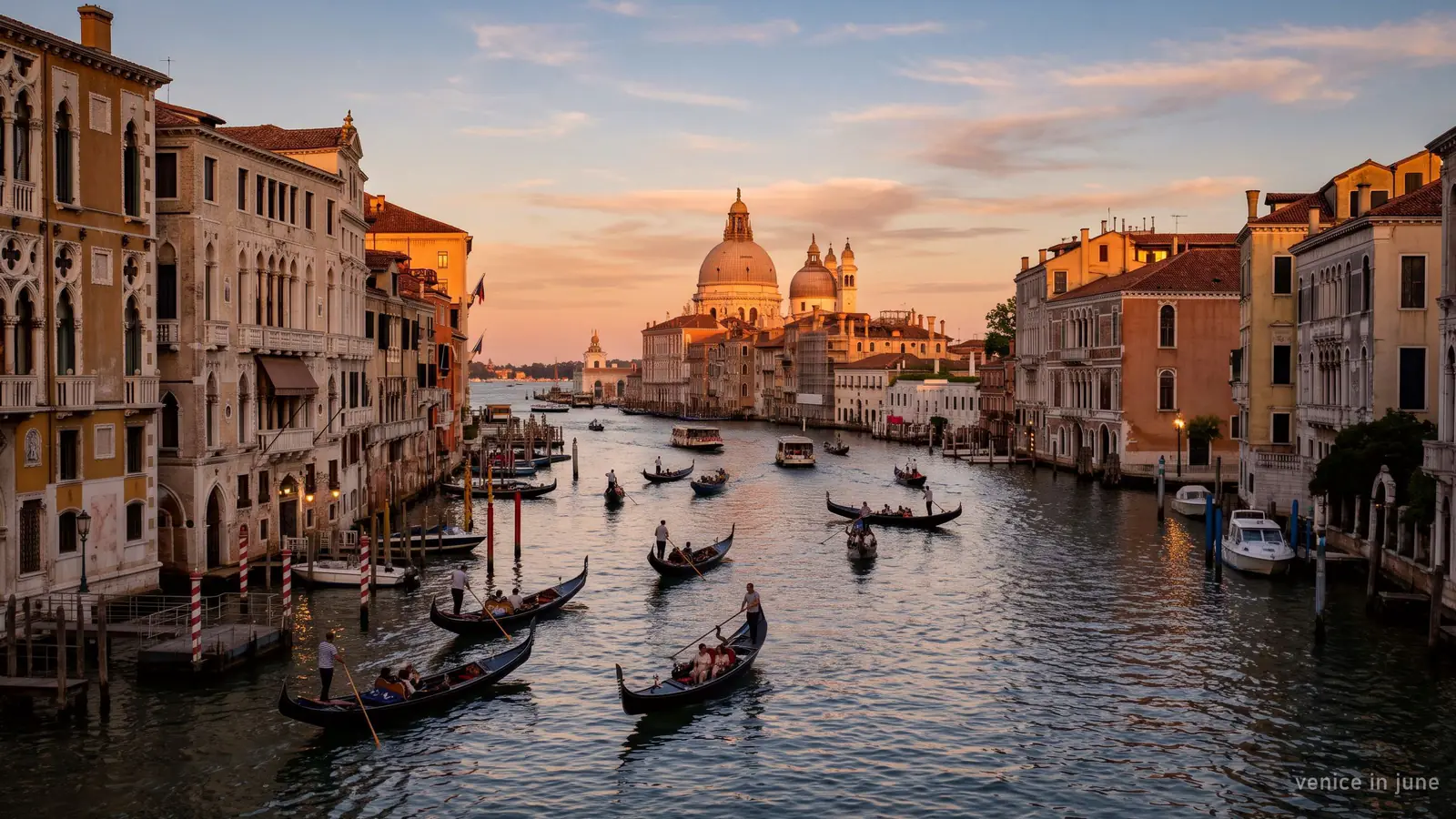
Venice in June 2027: Weather, Long Evenings and Gondolas
Venice in June: 24.4°C highs, sunset at 21:00 and the year's most wet days. What the longest evenings mean for a gondola ride and its fares.
June
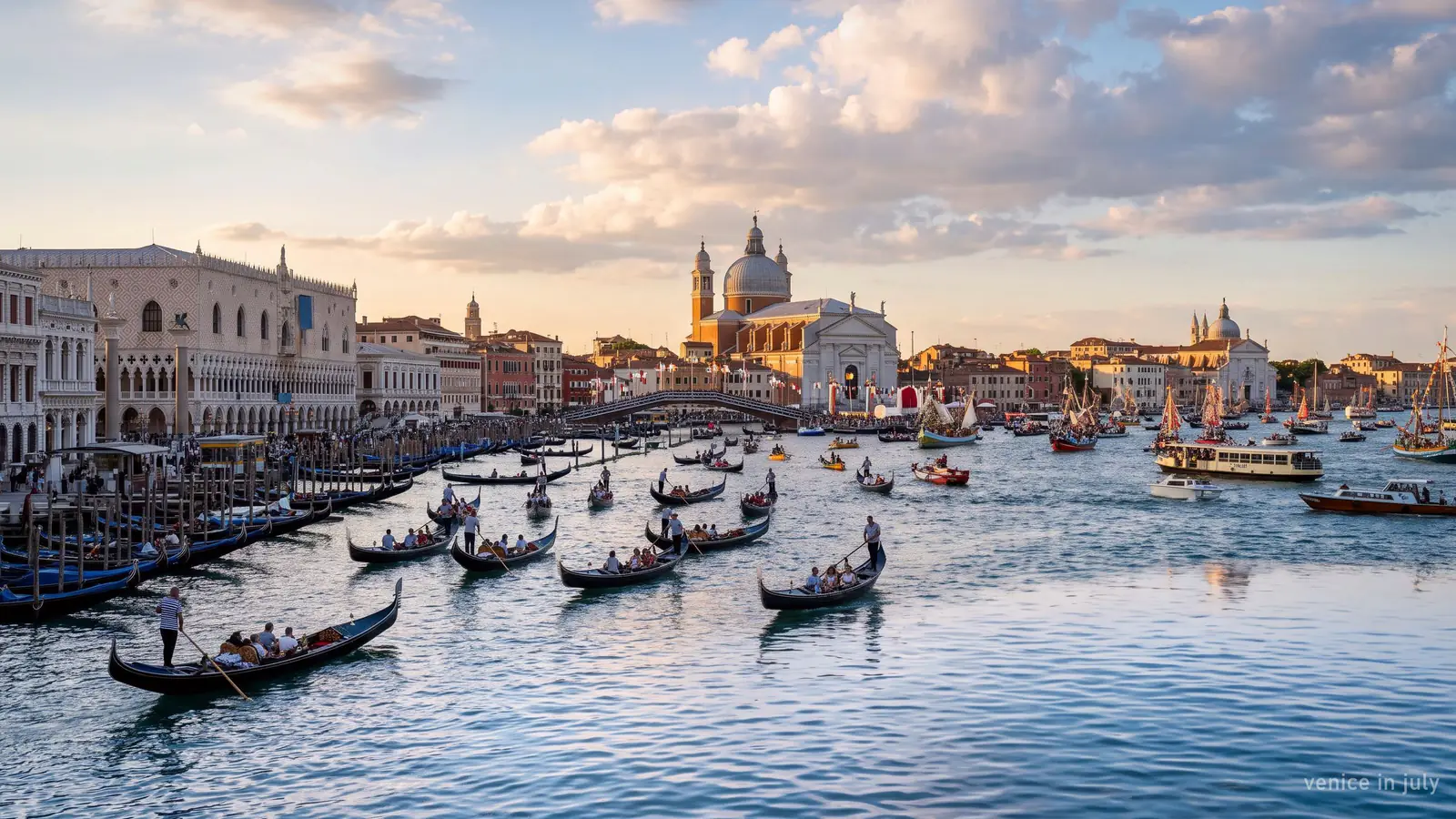
Venice in July 2027: Weather, Redentore and Gondola Rides
Venice in July: 27.5°C highs, sunset at 20:56 and the Festa del Redentore fireworks. When to ride a gondola in the heat and which fare applies.
July
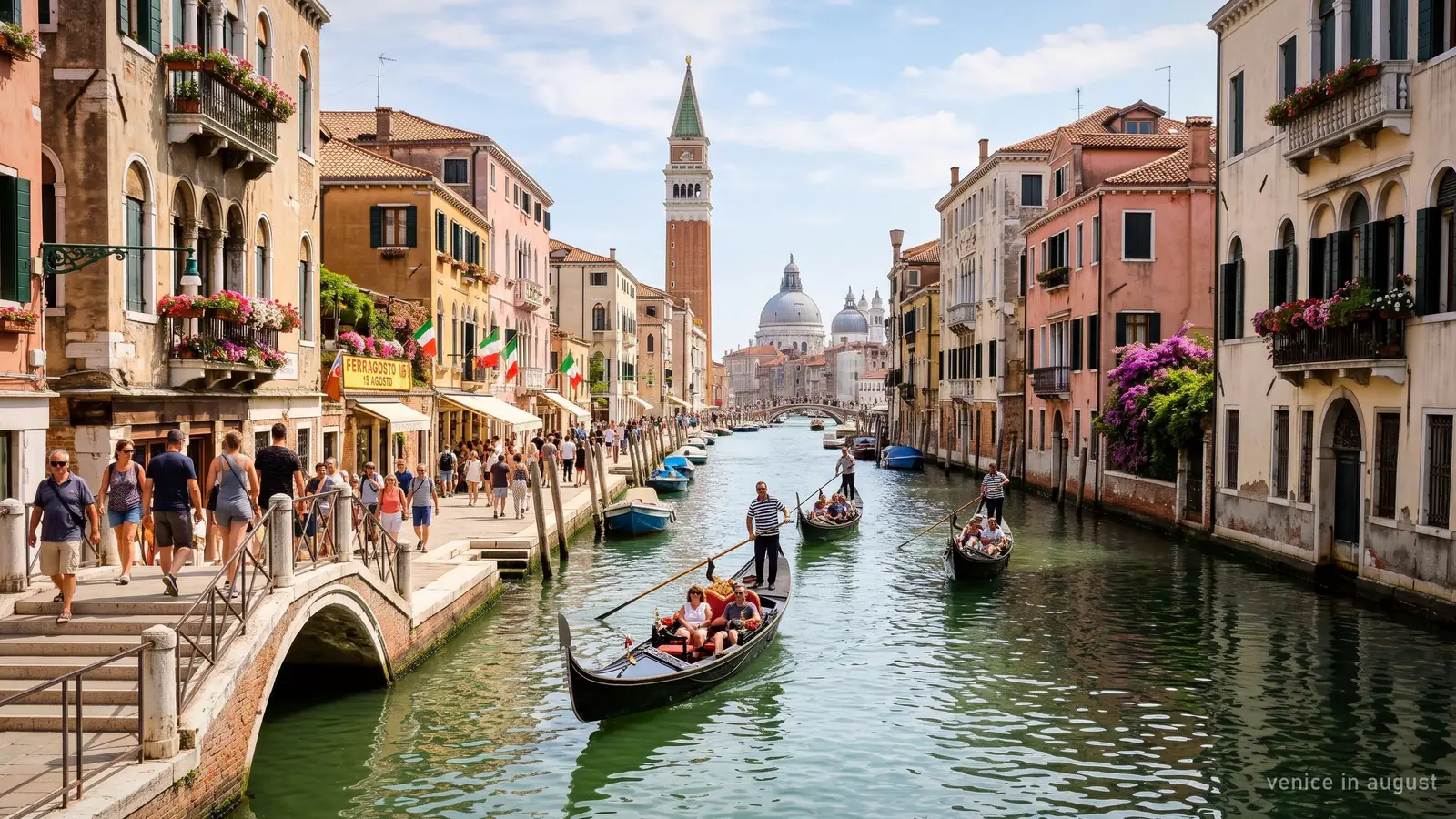
Venice in August 2027: Weather, Ferragosto and Gondolas
Venice in August: 27.3°C highs, sunset at 20:19 and Ferragosto on 15 August. When to ride a gondola in the summer heat and which fare applies.
August
Venice weather in autumn: September, October and November
Autumn starts warm and ends wet. September averages 23.4°C with sunset around 19:23 and the Regata Storica on its first Sunday. October is mild at 17.9°C but the wettest month, with 141 mm of rain. November drops to 12.1°C and is the peak month for acqua alta. From October the sunset falls before 19:00, so a sunset ride costs the €90 day fare again. Keep a spare day in October and November.
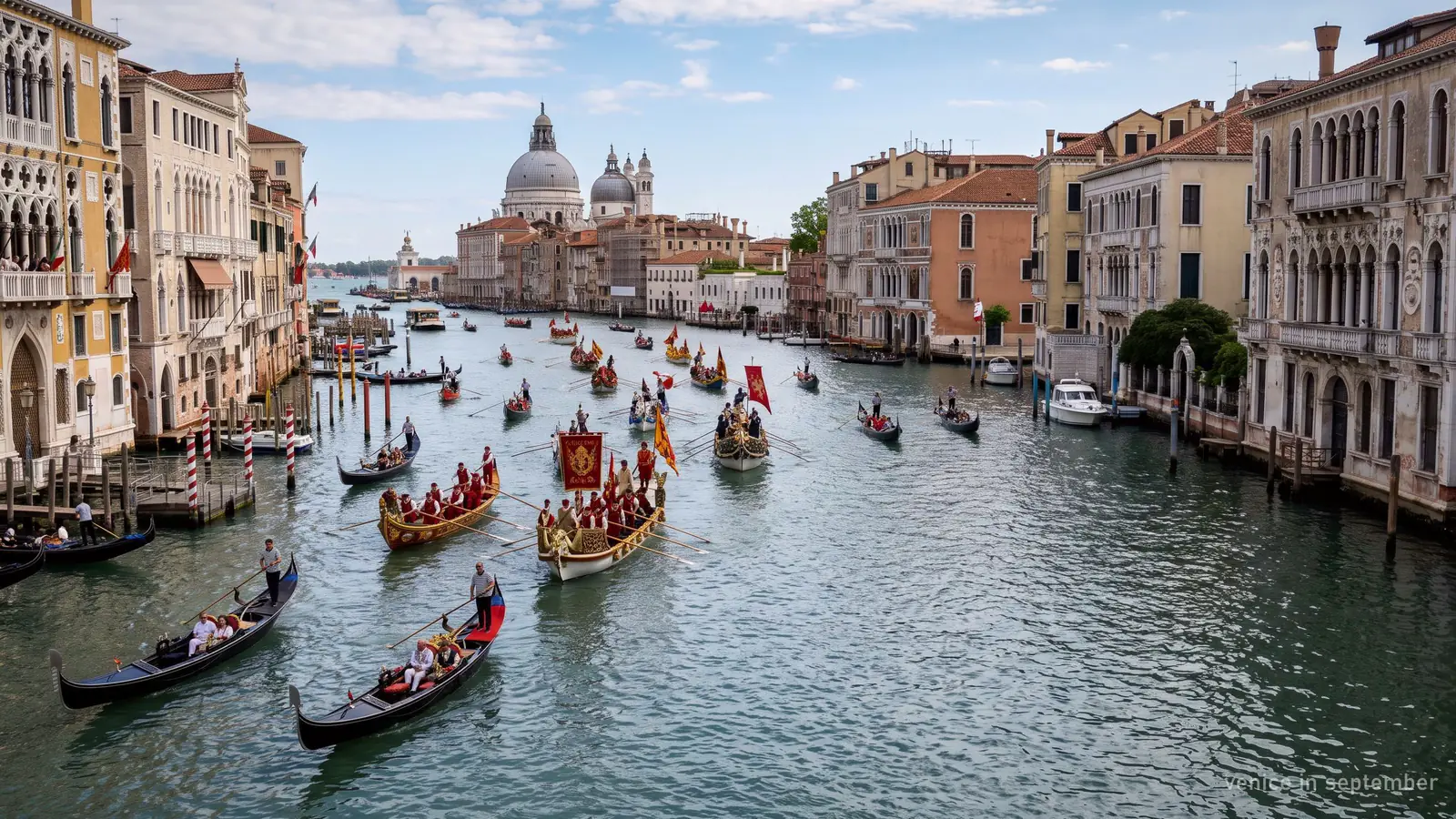
Venice in September 2027: Weather, Regata Storica, Gondolas
Venice in September: 23.4°C highs, sunset at 19:23 and the Regata Storica on the Grand Canal. Why it is one of the best months for a gondola ride.
September
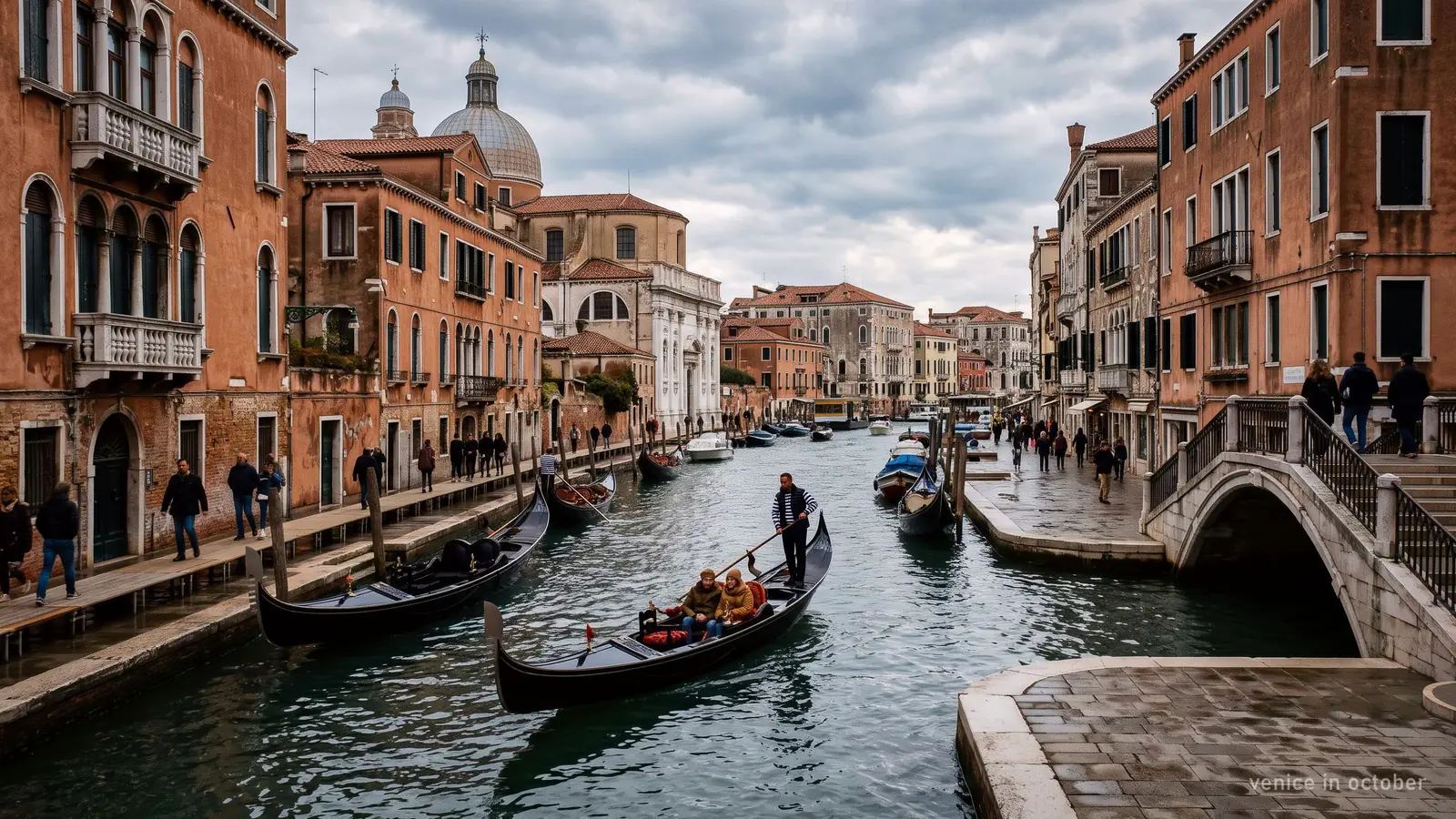
Venice in October 2027: Weather, Acqua Alta and Gondolas
Venice in October: 17.9°C highs, the year's most rain (141 mm) and the start of acqua alta season. How to plan a gondola ride and when sunset falls.
October
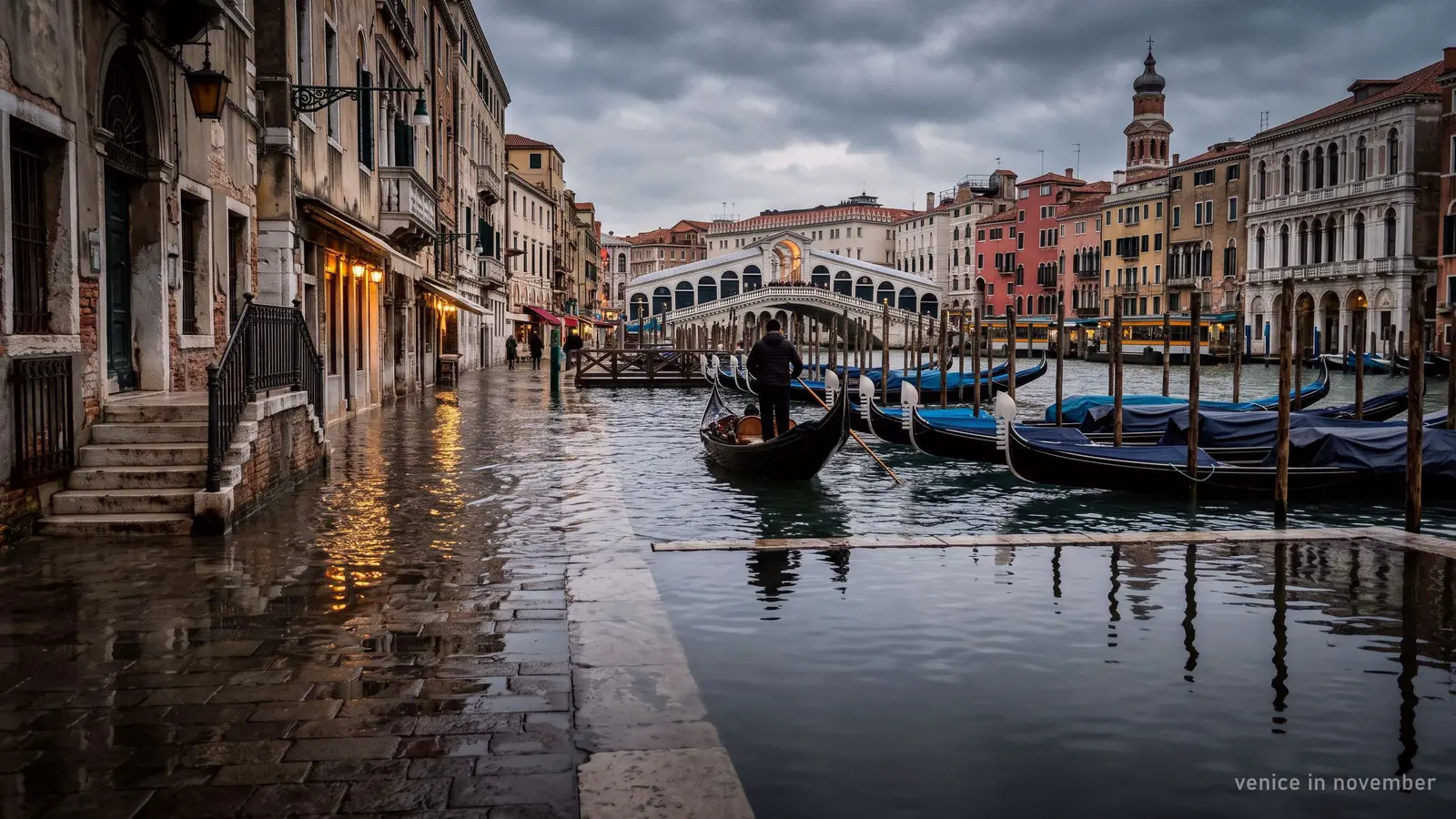
Venice in November 2026: Weather, Acqua Alta and Gondolas
Venice in November: 12.1°C highs, sunset at 16:41 and the peak of the acqua alta season. When to ride a gondola, the Salute feast and what to pack.
November
| Month | Avg high | Avg low | Rain | Wet days | Sunset |
|---|---|---|---|---|---|
| January | 6.7°C | 1.4°C | 67 mm | 5 | 16:52 |
| February | 8.6°C | 2.4°C | 62 mm | 6 | 17:36 |
| March | 12.3°C | 5.0°C | 76 mm | 7 | 18:15 |
| April | 16.3°C | 8.9°C | 81 mm | 10 | 19:55 |
| May | 20.9°C | 13.5°C | 92 mm | 11 | 20:33 |
| June | 24.4°C | 17.5°C | 106 mm | 12 | 21:00 |
| July | 27.5°C | 19.6°C | 79 mm | 11 | 20:56 |
| August | 27.3°C | 19.6°C | 82 mm | 10 | 20:19 |
| September | 23.4°C | 16.5°C | 102 mm | 8 | 19:23 |
| October | 17.9°C | 12.2°C | 141 mm | 10 | 18:26 |
| November | 12.1°C | 6.7°C | 129 mm | 9 | 16:41 |
| December | 8.1°C | 3.3°C | 78 mm | 7 | 16:27 |
What is the best time for a gondola ride in Venice?
For comfort, April to June and September. Average highs sit between 16°C and 25°C, the whole €90 day fare (09:00 to 19:00, 30 minutes) is in daylight, and high water is rare. September is the sweet spot for light: sunset is around 19:23, so a ride starting near 18:30 gets the late sun at the day fare. From April to August a sunset ride costs the €110 evening fare (35 minutes, from 19:00). For atmosphere on a budget, October to March lets you ride after dark at the day fare, because the sun sets before 19:00. The fare is per boat, not per person; see the gondola ride price and gondola hours.
What time of year is acqua alta in Venice?
Mostly October to December. The City of Venice's tide centre, the Centro Previsioni e Segnalazioni Maree, records the most high tides of +110 cm or more in November, then December and October, which together hold about 70% of events; in summer they are very rare. A tide above +80 cm is called acqua alta and first floods Piazza San Marco. High tides come mostly in the morning, and none has been recorded in the early afternoon, so an afternoon gondola ride is the safest slot. Since 2020 the MOSE barriers can close the lagoon; as of 2023 they are raised for tides forecast above 130 cm.
What is the rainiest month in Venice?
October by total rain, with about 141 mm, followed by November (129 mm). June has the most wet days, about 12, but less rain overall (106 mm). The driest month is February, with about 62 mm over 6 days. All the gondola rides listed on this site can be cancelled for a full refund up to 24 hours ahead, which helps in the wetter months. Browse them on the gondola tours page.
Frequently asked questions
What is the best time to visit Venice?
For a gondola ride, April to June or September: mild temperatures, daylight through the whole €90 day fare and little risk of high water. For after-dark rides at the day fare, October to March, when the sun sets before 19:00.
What is the rainiest month in Venice?
October, with about 141 mm in the 1991-2020 normals. June has the most wet days, about 12.
What time of year is acqua alta in Venice?
Mostly October to December, with November the peak, according to the city's tide centre. It is very rare in summer.
What is the hottest month in Venice?
July, with an average high of 27.5°C, just ahead of August at 27.3°C.
What is the coldest month in Venice?
January, with an average high of 6.7°C and an average low of 1.4°C.
Can you ride a gondola in winter?
Yes. The official fares apply all year: €90 for 30 minutes from 09:00 to 19:00 and €110 for 35 minutes from 19:00. From November to January the sun sets before 17:00, so much of the day fare falls after dark.